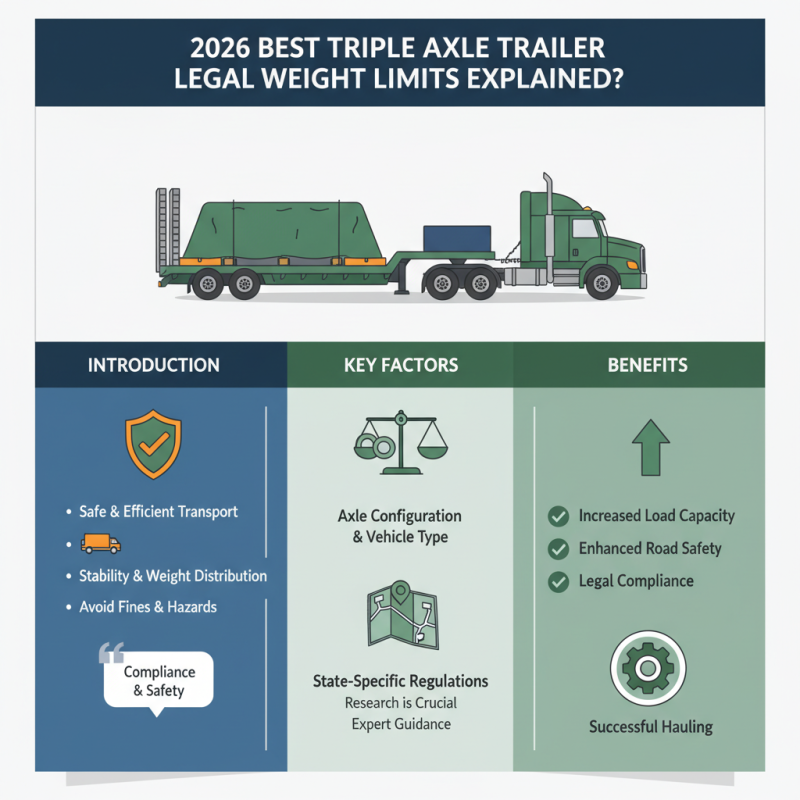
Understanding the legal weight limits for triple axle trailers is crucial for safe and efficient transportation. According to John Adams, a leading expert in vehicle regulations, "Knowing what are the legal weight limits for triple axle trailers ensures compliance and safety on the road."
Triple axle trailers are commonly used for heavy loads. They provide stability and better weight distribution. However, exceeding the legal limits can lead to serious risks, including fines and unsafe driving conditions. Maximum weight limits typically depend on axle configurations and vehicle type.
Many operators are unaware of specific state regulations. It’s easy to assume one size fits all. Each jurisdiction might have variations that affect permissible weights. Thorough research and expert guidance are essential. Striking a balance between load capacity and legal compliance is key for successful hauling.
Understanding Triple Axle Trailers: An Overview
Triple axle trailers are often favored for their enhanced stability and load capacity. These trailers typically feature three axles, which allow for better weight distribution. They can carry heavier loads compared to their dual-axle counterparts. According to industry reports, the average allowable weight for a triple axle trailer can range from 15,000 to 30,000 pounds, depending on various factors like wheel size and axle ratings.
Understanding the legal weight limits is crucial for compliance. The Federal Highway Administration (FHWA) notes the importance of adhering to weight restrictions to maintain road safety. Exceeding these limits can lead to penalties, increased wear on tires, and potential accidents due to instability. Many states have specific regulations that differ slightly, so checking local laws is essential.
Knowing the specific weight distribution for cargo is vital. For instance, a common recommendation is to keep 60% of the weight on the front and 40% on the rear. This balance helps avoid swaying or fishtailing during transportation. However, it’s easy to overlook load placement, which can lead to serious safety concerns. Proper loading practices combined with awareness of legal limits can significantly enhance safety on the roads.
Legal Weight Limits for Triple Axle Trailers in 2026
Understanding the legal weight limits for triple axle trailers in 2026 is crucial for safe and compliant hauling. Each state may have its specific regulations. However, federal standards also play a key role. In general, triple axle trailers can handle more weight due to their design. This allows for better weight distribution and stability. Typically, the Gross Vehicle Weight Rating (GVWR) for such trailers ranges from 15,000 to 30,000 pounds.
When calculating the legal weight limits, it’s essential to consider the trailer's own weight. Also, account for the cargo you intend to carry. Overloading can lead to serious safety risks, including tire blowouts and braking issues. In some cases, excess weight can even result in fines. Knowing your trailer's capacity helps prevent these troubles.
It's worth noting that while triple axle trailers are robust, they still have limitations. Not every load is appropriate. There are nuances regarding weight limits for different types of cargo. Furthermore, trailer manufacturers often provide recommendations that should be adhered to for safety. As regulations evolve, staying informed will aid in making better hauling decisions.
2026 Best Triple Axle Trailer Legal Weight Limits
The following bar chart illustrates the legal weight limits for triple axle trailers in 2026. These limits are crucial for compliance with transportation regulations and ensure safe hauling practices.
Factors Influencing Weight Limits for Triple Axle Trailers
When it comes to triple axle trailers, understanding weight limits is vital. Legal weight limits vary due to several key factors. These factors include axle configuration, trailer design, and the materials used in construction. Each element can impact how much weight the trailer can safely carry. This knowledge is crucial for compliance and safety during transportation.
Another significant aspect is the route taken. Different states have varying regulations regarding weight limits. Some bridges and roads may have weight restrictions that impact a trailer’s load capacity. It’s essential to consider these regulations to avoid fines or accidents. Additionally, the type of cargo affects weight distribution. Uneven loads can lead to instability, increasing the risk of accidents.
The driver’s experience also plays a role in navigating weight limits. An experienced driver knows how to load and secure cargo properly. Yet, even seasoned professionals can miscalculate. Regular checks and adherence to safety protocols are critical. Awareness of potential pitfalls fosters a culture of safety. Understanding these factors ensures that triple axle trailers remain compliant and safe on the road.
State-Specific Regulations for Weight Limits on Triple Axle Trailers
Understanding state-specific regulations for weight limits on triple axle trailers is crucial for operators. Each state has unique laws affecting maximum allowable weight. For instance, states like Texas and California have some of the highest weight allowances, often reaching up to 80,000 pounds for properly configured trailers. Conversely, some northeastern states impose stricter limits that can be as low as 65,000 pounds, significantly impacting transport logistics.
Professional sources reveal that nearly 15% of operators risk non-compliance due to lack of awareness. The American Association of State Highway and Transportation Officials (AASHTO) provides guidelines that many states adapt. However, states retain individual authority to adjust these weights based on infrastructure conditions, often leading to confusion among operators. Regular updates are essential, especially with ongoing infrastructure changes.
Moreover, penalties for exceeding weight limits can be severe. Fines can range from hundreds to thousands of dollars, not to mention potential safety risks. It’s essential to remain informed about these regulations continually. Neglecting this aspect can lead to operational disruptions. Operators must prioritize understanding local laws, which can affect efficiency and overall safety in transport.
2026 Best Triple Axle Trailer Legal Weight Limits Explained
| State |
Max Weight (Gross Vehicle Weight) |
Max Axle Weight (Single Axle) |
Max Axle Weight (Triple Axle) |
Notes |
| California |
80,000 lbs |
20,000 lbs |
60,000 lbs |
State-specific permits required for over 80,000 lbs |
| Texas |
80,000 lbs |
20,000 lbs |
60,000 lbs |
Additional weight limits apply for certain routes |
| Florida |
80,000 lbs |
20,000 lbs |
60,000 lbs |
Permits needed for overwidth or overweight |
| New York |
80,000 lbs |
20,000 lbs |
60,000 lbs |
Special routes for certain vehicle types |
| Illinois |
80,000 lbs |
20,000 lbs |
60,000 lbs |
50 mph speed limit on certain highways |
Best Practices for Ensuring Compliance with Weight Limits
When managing a triple axle trailer, adhering to legal weight limits is crucial. These limits vary by state and region. Understanding your local regulations helps prevent costly fines. Miscalculating weight can lead to violations, impacting your operations. Every axle has a specific weight capacity, so knowing your trailer's specifications is vital.
To ensure compliance, weigh your trailer before every trip. Use certified scales for accurate readings. If overweight, consider redistributing the load or offloading excess cargo. It's an ongoing process, not a one-time check. Also, keep thorough records. Document your weights and maintenance to show diligence in compliance efforts.
Regular inspections contribute to legal compliance as well. Make it a habit to check tire pressure, brake function, and axle conditions. These factors not only influence legal limits but also affect safety. Awareness and attention to detail can prevent accidents. Reflecting on your processes can reveal areas for improvement. Adjustments in operations based on weight management can lead to smoother rides.
FAQS
: Triple axle trailers have three axles for improved stability and weight capacity.
The typical weight limit is between 15,000 to 30,000 pounds, depending on various factors.
Knowing weight limits helps prevent penalties and enhances road safety.
It is suggested to keep 60% of the weight at the front and 40% at the rear.
Overloading can lead to tire blowouts and instability during transport.
Weigh your trailer before every trip and use certified scales to verify weight.
Yes, not all loads are suitable, and manufacturers provide specific recommendations.
Keep thorough records of your weights and maintenance for better compliance.
Check tire pressure, brakes, and axle conditions to ensure safety and compliance.
Reflecting can reveal areas for improvement and lead to safer, smoother operations.
Conclusion
In 2026, understanding the legal weight limits for triple axle trailers is essential for owners and operators to ensure compliance and safety on the roads. These trailers, designed for heavy loads, have specific weight regulations that vary by state, influenced by factors such as trailer design, cargo type, and road conditions. It is crucial to familiarize oneself with these legal requirements to avoid penalties and maintain road safety.
Additionally, best practices for ensuring compliance include regularly checking the trailer's weight, understanding state-specific regulations, and educating drivers about weight management. By taking these steps, users can effectively navigate what the legal weight limits for triple axle trailers entail and ensure their operations remain within the legal framework, promoting safer transportation practices.

 Flex Truck