How to Choose the Right Dump Truck Capacity for Construction Needs?

Time:2026-03-25 Author:Henry
0%

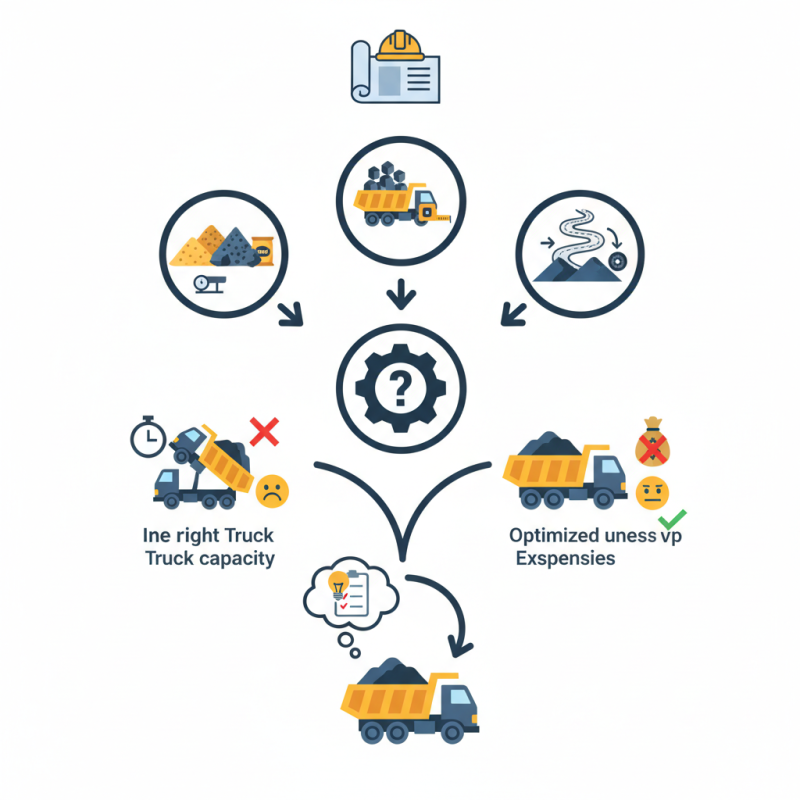
When considering construction projects, understanding how to choose the right dump truck capacity for construction is crucial. Each project has unique demands, and a truck's capacity affects efficiency and costs. Selecting the appropriate size minimizes downtime and enhances productivity on-site.

Many builders struggle with this decision. A truck that is too small can delay operations, while one that's too large may lead to unnecessary expenses. Assessing the scale of the project is essential. Understanding material weights and volumes can guide the decision. It’s not just about fits; it’s about optimizing workflows and resource allocation.

Additionally, making the right choice involves more than calculations. One must consider the terrain and distance materials need to be transported. Just because a truck meets the numerical requirements doesn’t mean it will perform in all conditions. Reflecting on past experiences can reveal insights. Often, contractors learn the hard way that misjudgments in capacity can lead to inefficiencies and added costs.
How to Choose the Right Dump Truck Capacity for Construction Needs?

Understanding Dump Truck Capacity and Its Importance in Construction

Selecting the appropriate dump truck capacity is crucial for construction projects. The capacity refers to how much material the truck can carry. This can range widely, affecting operational efficiency. It is vital to consider the type of materials being transported. For instance, dirt and sand are lighter than gravel or crushed stone. Planning ahead can save time and reduce potential costs.

Understanding the importance of dump truck capacity also involves evaluating project demands. If a project requires multiple trips, a smaller truck may suffice. However, larger projects may need bigger trucks to avoid delays. Miscalculating capacity can lead to inefficiencies. Overloading can strain the truck. Underloading might waste resources. Finding that balance is not always easy.

Construction sites often vary in space as well. A truck's size may affect maneuverability. Tight spaces can complicate operations. It’s essential to measure the site beforehand. This ensures the truck can access the area without issues. Drivers may face challenges if they cannot reach certain spots. Reflecting on these factors aids in making an informed decision.

Assessing the Types of Materials to Be Transported by the Dump Truck

When choosing the right dump truck capacity, it’s crucial to assess the types of materials you need to transport. Different materials vary significantly in weight and volume. For instance, a cubic yard of sand weighs approximately 2,700 pounds, while a cubic yard of gravel can weigh around 3,000 pounds. This weight difference directly influences the load capacity of the dump truck you choose.

Considerations extend beyond weight. Some materials, like demolition debris, can be bulky yet light. Others, such as concrete or asphalt, are dense and heavy. If a truck is overloaded, it can lead to safety hazards. A report by the National Truck Equipment Association highlights that about 70% of dump truck accidents are due to improper loading. Hence, understanding your materials is vital.

Choosing the wrong capacity can result in inefficiencies. If a truck is too small, multiple trips may be required, increasing labor costs and time. Conversely, a truck that’s too large can lead to excessive wear and tear. Ultimately, careful evaluation of the materials will ensure you select a dump truck that meets your project needs without compromising safety or efficiency.

Calculating the Required Capacity Based on Project Specifications

When calculating the required capacity for a dump truck, start with your project specifications. Assess the materials you will transport. Are you dealing with gravel, soil, or construction debris? Each material has a different weight and density. Knowing this helps determine how much you can load.

For quick estimates, use simple calculations. Multiply the truck’s dimensions by the desired load height. This gives you volume. Then convert it to weight using material density. Be mindful that sometimes these figures can be misleading. It’s easy to overestimate.

Tips: Always round down when estimating load sizes. This ensures you won’t exceed truck limits. Load distribution matters too; an uneven load can cause problems. Regularly check the truck's actual capacity. Gauge your needs based on project timelines as well. Sometimes, opting for multiple smaller loads is better than pushing a larger truck to its limits.

How to Choose the Right Dump Truck Capacity for Construction Needs?

Project Type Estimated Load (Tons) Recommended Dump Truck Capacity (Cubic Yards) Typical Dump Truck Size
Residential Construction 5 - 10 10 - 12 10-12 Yard
Commercial Development 10 - 20 12 - 16 14-16 Yard
Road Construction 20 - 30 16 - 20 18-20 Yard
Landscaping Projects 3 - 8 8 - 10 6-8 Yard
Mining Operations 30 - 50 20 - 24 24 Yard

Evaluating Different Dump Truck Sizes and Their Load Limits

When choosing a dump truck, considering size and load limit is crucial. Different projects require various capacities. A smaller dump truck might transport materials for landscaping, while a larger one is suitable for heavy construction.

Understanding load limits helps avoid accidents. Overloading a truck can lead to mechanical issues. For instance, a truck with a 10-ton capacity shouldn't carry more than its limit. This prevents damage and ensures efficiency. Sometimes, operators underestimate weight. Concrete, for example, is denser than gravel. Miscalculating weight can lead to costly mistakes.

Evaluate project needs carefully. Sometimes, a medium-sized truck fits best. It can handle various loads without being too cumbersome. However, think about future projects as well. A too-small truck might hinder progress. Reflect on past jobs and how the truck capacity affected them. Getting the right size is not just about numbers; it's about optimizing workflow.

Considering Terrain and Accessibility When Choosing Dump Truck Capacity

When selecting the right dump truck capacity for construction, terrain plays a crucial role. A flat, open space might allow for larger trucks, while hilly or narrow areas may require smaller, more maneuverable options. If the project is in a rugged location, the dump truck must handle steep inclines and narrow pathways. Not all trucks can efficiently navigate these challenges.

Accessibility limits are essential too. If the site is difficult to reach, a smaller truck could save time and frustration. You may need to reconsider your choice if the truck cannot fit at the loading zone. Insufficient capacity can slow down the process. Think about how often you will be loading and unloading. Will one trip be enough? Or will multiple trips be needed?

Larger trucks can carry more but might not be versatile on tight sites. Some projects require balance. It’s important to evaluate which truck fits best. In many instances, choosing the wrong truck may lead to complications.

Always reflect on your specific needs and the environment carefully. Make your decision based on real conditions, not just specs on paper.

FAQS

: Why is it important to consider dump truck size and load limit?

: The size and load limit affect project efficiency and safety. Overloading can cause mechanical issues.

What happens if I underestimate the weight of materials?

Underestimating weight can lead to costly mistakes and accidents. Some materials, like concrete, are denser than others.

How do terrain and accessibility impact my choice of dump truck?

Rough terrain requires smaller, more maneuverable trucks. Accessibility can limit options for larger vehicles.

Why might a medium-sized truck be the best option?

A medium-sized truck can handle various loads without being too cumbersome or too small for future needs.

What if my truck can't fit at the loading zone?

If the truck is too large for the site, it can significantly slow down the loading and unloading process.

How do I know if I need multiple trips?

Evaluate your project's scale. If one trip isn’t enough, a smaller truck may be more efficient.

What should I reflect on when choosing a truck?

Consider past jobs and how truck capacity affected workflow. Reflect on specific project needs carefully.

Is it okay to sometimes choose a truck based on specs alone?

No, making decisions based on real conditions is vital. Specs do not account for the environment and needs.

Conclusion

When considering how to choose the right dump truck capacity for construction, it is essential to understand the significance of dump truck capacity in relation to project needs. The process begins with assessing the types of materials that will be transported, such as soil, gravel, or waste, as this directly influences the required load capacity. Calculating the needed capacity based on project specifications ensures that the truck can handle the demands of the job effectively.

Additionally, evaluating various dump truck sizes and their load limits is crucial, as different projects may require different capacities. Finally, considering the terrain and accessibility of the construction site can impact the choice of dump truck, ensuring that it can maneuver effectively and deliver materials where needed. By following these steps, one can make an informed decision that aligns with construction requirements.

Henry

Henry

Henry is a dedicated marketing professional with a profound expertise in the company's offerings. With years of experience in the industry, he possesses an impressive understanding of the market dynamics and consumer behaviors that drive success. Henry is committed to sharing his insights through......